Dermaplaning vs. microdermabrasion
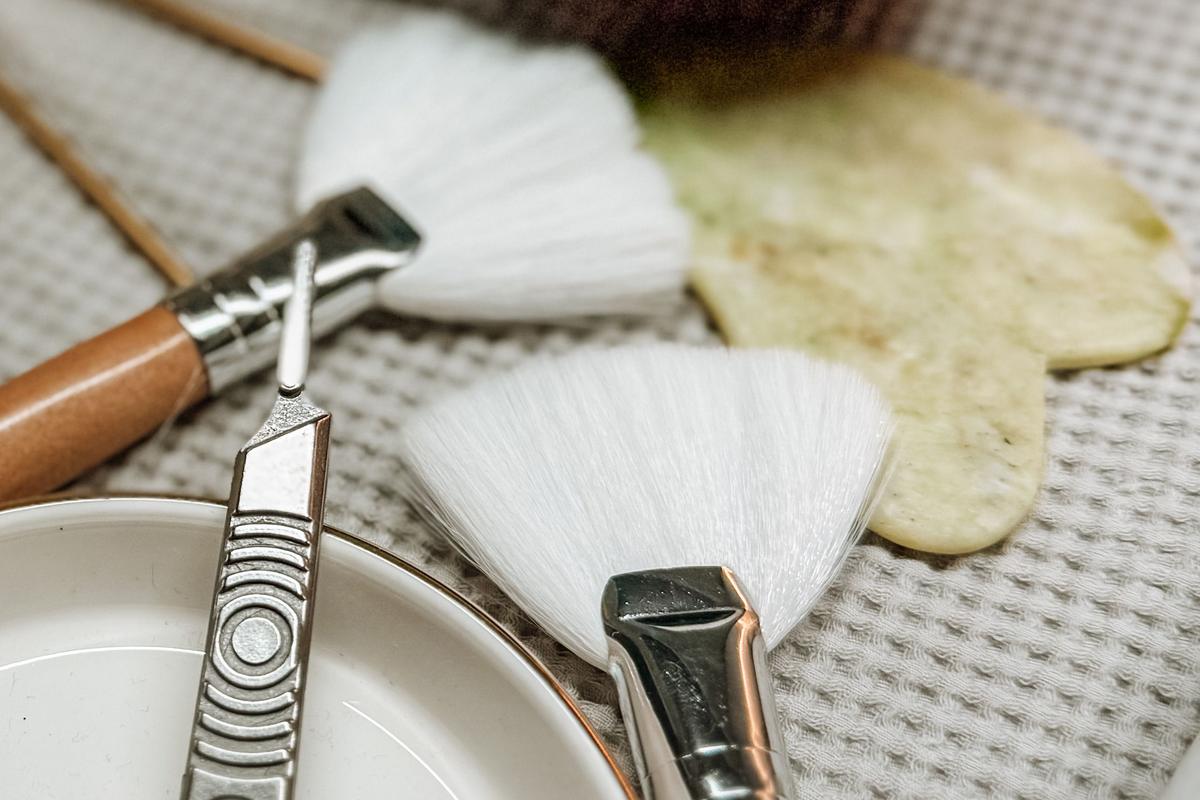
"Dermaplaning or microdermabrasion" is one of the most common exfoliation questions we hear, usually from someone who has read two conflicting blog posts and still isn't sure what either treatment actually does. Both promise smoother, brighter skin with no downtime. Both get lumped together as "facial resurfacing." And both are real treatments here — just not offered the same way.
What's the actual difference between dermaplaning and microdermabrasion?
Both remove the outer layer of dead skin cells and leave you with an immediate glow, which is exactly why they get compared so often. The mechanism is where they split. Dermaplaning uses a feather-light surgical blade, moved slowly across cleansed skin by hand, to lift away dead skin and the fine vellus hair — the "peach fuzz" — that catches light and makeup. Microdermabrasion uses a diamond-tip wand that mechanically buffs the surface and vacuums the exfoliated skin away. No blade, and no hair removal — just physical abrasion and suction.
At The Quiet Skin, both are on the menu, but structured differently. Dermaplaning is its own appointment, or it pairs with a Signature Facial. Microdermabrasion is an add-on to any facial rather than something you book by itself.
How does dermaplaning work?
It starts with a warm cleanse, then a blade glides slowly across the skin in short, controlled strokes. There's no cutting sensation to speak of — most people describe it as relaxing rather than scratchy. The blade lifts away the dulling outer layer of dead cells along with the vellus hair, leaving skin silky and noticeably brighter within the same appointment. On its own it runs about half an hour; paired with a Signature Facial, it opens the ritual so everything applied afterward — mask, serum, massage — is landing on fresh, receptive skin.
How does microdermabrasion work here?
As an add-on to a facial, microdermabrasion adds diamond-tip exfoliation targeting stubborn texture, small bumps, and dullness that a standard facial cleanse doesn't fully resolve. The wand's mechanical abrasion, combined with suction, is a deeper level of physical exfoliation than the manual steps built into a typical facial. It's not a blade and it doesn't touch facial hair — it's working the surface of the skin itself, not what's growing out of it.
Does dermaplaning make hair grow back thicker or darker?
No, and this is worth settling plainly because it's the reason a lot of people avoid dermaplaning in the first place. Hair texture and color are determined by the follicle, not by whatever touched the surface last. A blade doesn't reach the follicle, so vellus hair grows back exactly as fine and light as it was before. What changes temporarily is the feel of a freshly cut hair tip — it can feel a touch different for a few days, the same way freshly shaved leg hair briefly feels stubbly before it softens again. Microdermabrasion sidesteps this question entirely, since it isn't removing hair at all — which is sometimes the actual deciding factor for someone who wants exfoliation without touching facial hair in any way.
Which one is better for congestion, bumps, and texture?
This is where the two treatments genuinely diverge in what they're built for. Dermaplaning's main strength is the combination of dead-skin removal and hair removal in one pass — it's the better choice when peach fuzz is part of what's dulling your skin or catching your foundation. Microdermabrasion's diamond-tip action is more targeted at stubborn textural issues — small bumps, rough patches, general dullness — through mechanical buffing rather than a blade. If congestion and breakouts are the main concern, neither is the right tool on its own; that's a conversation for a facial with the right extractions, or a salicylic-based chemical peel.
Can you get dermaplaning and microdermabrasion in the same appointment?
Technically, yes — since microdermabrasion is an add-on to any facial, and Dermaplaning + Signature Facial is one of our appointment options, the pieces could theoretically stack. Honestly, though, we usually wouldn't recommend it. Both treatments are working the same outer layer of skin, and stacking two forms of physical exfoliation in one visit risks over-stripping skin that only needed one pass to begin with. If you're drawn to both, the more sensible path is usually alternating them across visits rather than combining them in one sitting — something we'll talk through at your appointment based on how your skin is actually doing that day.
Who should skip one or both of these treatments?
Active breakouts, a cold sore, sunburn, or a compromised barrier are reasons to wait on dermaplaning — a blade over inflamed or broken skin does more harm than good. The same caution applies to microdermabrasion: mechanical abrasion over active acne or irritated skin tends to spread inflammation rather than calm it. If your skin is mid-flare, the better first step is usually a calming facial on its own, with either exfoliation option added back in once skin has settled.
What about at-home microdermabrasion kits?
If you've seen at-home diamond-tip devices or exfoliating pads marketed as "microdermabrasion," it's worth knowing they're a different intensity entirely from a professional treatment — gentler by design, since there's no one there to read your skin mid-treatment and adjust. That's not a reason to avoid them, but it is a reason not to expect the same result. A professional session, whether dermaplaning or a microdermabrasion add-on, is calibrated in real time by someone trained to see what your skin can actually handle that day.
So which one should you book?
If peach fuzz, foundation catching on texture, or a blade's precision appeals to you, start with dermaplaning — it's the only one of the two built to handle hair as well as dead skin. If you're already booked for a facial and want a deeper pass at rough texture or small bumps without touching facial hair at all, add microdermabrasion to that appointment instead. Neither is the wrong answer; they're solving slightly different problems, and the honest move is picking based on what your skin is actually dealing with rather than which name shows up more in search results.
Where to go from here
You can read the full details on the dermaplaning page, including how it pairs with a Signature Facial. Microdermabrasion is listed among the facial add-ons on the services menu. Or skip ahead and book a consultation — we'll look at your skin together and figure out which exfoliation, if either, actually makes sense right now.
Questions, answered
Is dermaplaning or microdermabrasion better for peach fuzz removal?
Dermaplaning, without question — it is the only one of the two that removes vellus hair. Microdermabrasion polishes the skin's surface but leaves the hair alone entirely.
Can I book microdermabrasion on its own, without a facial?
Not at The Quiet Skin — it is structured as an add-on to any facial rather than a standalone appointment, so it always comes attached to a full facial.
Is microdermabrasion more intense or uncomfortable than dermaplaning?
Neither should be uncomfortable. Both are surface-level treatments, typically described as a light scratching or gentle sanding sensation rather than anything painful.
Will either treatment help fade acne scars?
Both can soften the look of shallow texture with repeated sessions, but neither reaches deep enough for true scarring — a chemical peel or a dermatologist is the better route for that.
How soon can I wear makeup after dermaplaning or microdermabrasion?
Right away for both. There is no downtime with either, and many people book one specifically because it leaves skin smoother for makeup application immediately after.